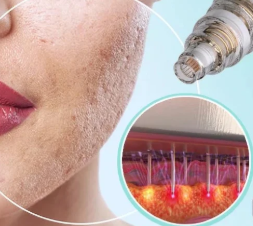



Old dead skin cells, sebum, and impurities accumulated on the skin surface can make the skin texture rough and the tone dull over time.
This is when peeling treatments become necessary.
Recently, instead of strong chemical peels, a variety of gentle and low-irritation peeling procedures have been developed to suit different skin types.
Among them, we will compare the characteristics, effects, and recommended skin types of Aqua Peel, LHALA-Peel, and PLA Peel.
Aqua Peel
What Is Aqua Peel?
As the name “Aqua (water) + Peel (exfoliation)” suggests, Aqua Peel is a hydrating peeling treatment that uses water pressure and suction technology to gently remove dead skin cells, sebum, and impurities.
By applying peeling solutions containing AHA, BHA, etc., it dissolves and extracts waste from the pores, finishing with a hydrating and soothing solution to minimize irritation.
Main Benefits
Recommended Skin Types
Particularly effective for oily or combination skin, blackhead or pore concerns, and acne-prone skin with excessive sebum.
However, those with severe redness or sensitive skin should adjust the treatment intensity.
Precautions
Cleansing and makeup can be done 1–2 hours after the procedure
Avoid scrubbing, saunas, and hot baths for 3–7 days
Best results are achieved with 3 or more sessions at 1–2 week intervals
LHALA-Peel
What Is LHALA-Peel?
LHALA-Fill is a fourth-generation low-irritation peeling treatment that combines LHA (Lipohydroxy Acid) with alkaline ingredients.
Rather than simply removing dead skin, it strengthens the skin barrier and promotes collagen production a smart peeling solution.
Main Benefits
Recommended Skin Types
Suitable for sensitive skin, dry or thin skin, those who frequently experience flakiness, and individuals with a weakened skin barrier.
Precautions
Although the treatment intensity can be adjusted, avoid excessive stimulation
Can be performed weekly
UV protection and moisturization are essential
PLA Peel
What Is PLA Peel?
PLA Peel combines LHA and PHA ingredients to gently induce natural exfoliation.
Its mildly alkaline formulation helps improve the skin barrier and enhance moisture retention.
Some clinics also combine it with Platinum PTT (Platinum Photothermal Therapy) for programs targeting pore and pigmentation improvement.
Main Benefits
Recommended Skin Types
Recommended for sensitive skin requiring gentle exfoliation, normal to combination skin, and those looking to improve pores and skin tone.
Conclusion
Aqua Peel → Effective for sebum, pore, and acne management
LHALA-Peel → Suitable for sensitive and dry skin; strengthens the skin barrier
PLA Peel → Helps gently refine skin texture and improve smoothness
By selecting a peeling treatment that matches your skin condition and concerns,
you can maintain a clear, radiant, and resilient complexion for a long time.
Consultation with the doctor about right peel treatment
Aqua Peel vs. LHALA-Peel vs. PLA Peel
Which Peeling Treatment Is Best for Your Skin?
Old dead skin cells, sebum, and impurities accumulated on the skin surface can make the skin texture rough and the tone dull over time.
This is when peeling treatments become necessary.
Recently, instead of strong chemical peels, a variety of gentle and low-irritation peeling procedures have been developed to suit different skin types.
Among them, we will compare the characteristics, effects, and recommended skin types of Aqua Peel, LHALA-Peel, and PLA Peel.
Aqua Peel
What Is Aqua Peel?
As the name “Aqua (water) + Peel (exfoliation)” suggests, Aqua Peel is a hydrating peeling treatment that uses water pressure and suction technology to gently remove dead skin cells, sebum, and impurities.
By applying peeling solutions containing AHA, BHA, etc., it dissolves and extracts waste from the pores, finishing with a hydrating and soothing solution to minimize irritation.
Main Benefits
Recommended Skin Types
Particularly effective for oily or combination skin, blackhead or pore concerns, and acne-prone skin with excessive sebum.
However, those with severe redness or sensitive skin should adjust the treatment intensity.
Precautions
Cleansing and makeup can be done 1–2 hours after the procedure
Avoid scrubbing, saunas, and hot baths for 3–7 days
Best results are achieved with 3 or more sessions at 1–2 week intervals
LHALA-Peel
What Is LHALA-Peel?
LHALA-Fill is a fourth-generation low-irritation peeling treatment that combines LHA (Lipohydroxy Acid) with alkaline ingredients.
Rather than simply removing dead skin, it strengthens the skin barrier and promotes collagen production a smart peeling solution.
Main Benefits
Recommended Skin Types
Suitable for sensitive skin, dry or thin skin, those who frequently experience flakiness, and individuals with a weakened skin barrier.
Precautions
Although the treatment intensity can be adjusted, avoid excessive stimulation
Can be performed weekly
UV protection and moisturization are essential
PLA Peel
What Is PLA Peel?
PLA Peel combines LHA and PHA ingredients to gently induce natural exfoliation.
Its mildly alkaline formulation helps improve the skin barrier and enhance moisture retention.
Some clinics also combine it with Platinum PTT (Platinum Photothermal Therapy) for programs targeting pore and pigmentation improvement.
Main Benefits
Recommended Skin Types
Recommended for sensitive skin requiring gentle exfoliation, normal to combination skin, and those looking to improve pores and skin tone.
Conclusion
Aqua Peel → Effective for sebum, pore, and acne management
LHALA-Peel → Suitable for sensitive and dry skin; strengthens the skin barrier
PLA Peel → Helps gently refine skin texture and improve smoothness
By selecting a peeling treatment that matches your skin condition and concerns,
you can maintain a clear, radiant, and resilient complexion for a long time.
Consultation with the doctor about right peel treatment